
Video

Publications
Op-ed
[The Chosun Ilbo Op-ed] Pro-China Left-Wing Label Sparks South Korea-U.S. Alliance Crisis
- Expert
- Choi Kang
- Hit
- 146
- Date
- 26-06-01 09:52


Last year at the APEC CEO Summit in Gyeongju, U.S. President Donald Trump referred to South Korea as "a precious friend and ally of the United States," and U.S. Secretary of Defense Pete Hegseth also evaluated it as a "model ally." However, unsettling warning signs are being detected beneath this surface. Recently, U.S. intelligence authorities viewed Unification Minister Chung Dong-young’s mention of a North Korean uranium enrichment facility in North Pyongan Province as a risk of information leakage and restricted intelligence sharing with South Korea. Additionally, President Trump named South Korea as one of the allies that benefits from the U.S. military presence for security but remains passive in supporting the United States.
U.S. political circles and think tanks have also defined South Korea’s political and diplomatic stance as "pro-China left-wing." Bruce Klingner, former senior research fellow at the Heritage Foundation, diagnosed in early last year, "If a new progressive (left-wing) regime comes to power in South Korea, it will be conciliatory toward Beijing and Pyongyang and more hostile toward Washington, which China would highly welcome." Evans Revere, former Senior Deputy Assistant Secretary for East Asian and Pacific Affairs at the U.S. Department of State, also stated, "China will view the rise of the Democratic Party of Korea, known for its pro-China tendencies, as a positive development."
The Lee Jae Myung government declared, "We will develop the South Korea-U.S. alliance into a future-oriented comprehensive strategic alliance," but its conflicting actions have provided the U.S. with grounds for misunderstanding and distrust. South Korea did not participate in the trilateral air joint training proposed by the U.S. in February and protested against the U.S. Forces Korea’s air training conducted in the West Sea.
Due to this erosion of trust, South Korea’s exclusion is also being detected in the defense and trade sectors. The U.S. Department of Defense decided to establish a defense supply chain between over 50 companies, including U.S. advanced startups and Japan’s Mitsubishi Heavy Industries, to mass-produce drones, but South Korea was excluded from this massive "drone alliance." In the recently launched Command and Control System Interoperability Network (IMN) led by the Indo-Pacific Command, core Pacific allies such as the U.S., Japan, Australia, Canada, and the Philippines are sharing real-time military operational information against China, but South Korea is absent. In the trade sector, U.S. Representative Darrell Issa criticized, "The pro-China left-wing government of South Korea has begun attacking U.S. companies such as Meta and Coupang, the ‘Amazon of South Korea,’" and 54 Republican Study Committee (RSC) members sent a letter to Ambassador to the U.S. Kang Kyung-wha demanding an end to discrimination against U.S. companies in South Korea.
In the rapidly changing international order, abandoning alliances is directly linked to a nation’s survival. China, advocating the "Chinese Dream" to become the center of the world by 2049, is shaking the U.S.-led order by uniting with authoritarian regimes such as North Korea, Iran, and Russia. North Korea has built the capacity to cast a "nuclear shadow" over us by advancing its nuclear capabilities. The Trump administration, approaching matters from a transactional perspective, is furious at NATO allies that did not actively support the U.S. in the U.S.-Iran war and is even considering withdrawing from NATO.
If our government merely emphasizes the justification of "strengthening sovereignty," President Trump could use the reduction of U.S. troops in South Korea or the early transfer of wartime operational control as negotiation cards with North Korea and China, much like how he uses Taiwan, located 9,500 miles away from the U.S., as a bargaining chip. This is why Commander of U.S. Forces Korea Xavier Brunson warned, "Political convenience should not precede conditions," regarding the transfer of wartime operational control. The U.S. National Defense Strategy (NDS) emphasizes the role of allies within the "First Island Chain," which connects Kyushu, the Spratly Islands, Taiwan, Luzon, and Borneo, to counter Chinese expansion. Commander of the U.S. 8th Army Joseph Hilbert recently reiterated, "South Korea is also part of the First Island Chain." This suggests that an "Acheson Line of the 21st century," which excludes allies wary of China from the U.S. defense perimeter, could be formed.
If Washington misunderstands South Korea as a nation that wavers under Chinese pressure and may even compromise core elements of the alliance, the slogan of an "ironclad alliance" is nothing but a house of cards. The government and political circles must stop domestic populism that holds security hostage. Sophisticated strategies and substantive communication to address the deep concerns of U.S. political circles and rebuild the collapsed South Korea-U.S. alliance are more urgently needed than ever.
* The view expressed herein was published on June 1 in The Chosun Ilbo and does not necessarily reflect the views of The Asan Institute for Policy Studies.
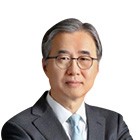
Choi Kang
President
Dr. CHOI Kang is the President at the Asan Institute for Policy Studies. Previously, he was the dean of Planning and Assessment at the Korean National Diplomatic Academy. In 2012, Dr. Choi served as the president at the Institute of Foreign Affairs and National Security (IFANS). He was also a professor and director general for American Studies at IFANS, a research fellow at the Korea Institute for Defense Analyses, and senior director for Policy Planning and Coordination on the National Security Council Secretariat. He holds several advisory board memberships including: the Committee on Foreign Affairs, Trade, and Unification of the National Assembly; Ministry of National Defense; Ministry of Unification; Air Force Development Committee; and the National Unification Advisory Council. Dr. Choi was also a South Korean delegate to the Four-Party Talks. He writes extensively on the ROK-US alliance, North Korean military affairs, inter-Korean relations, crisis management, and multilateral security cooperation. Dr. Choi received his B.A. from Kyunghee University, M.A. from the University of Wisconsin-Madison, and his Ph.D. in political science from Ohio State University.
view more