
Video

Publications
Op-ed
[The Chosun Ilbo Op-ed] Trump's Monroe Doctrine Risks Global Order, South Korea's Strategic Response
- Expert
- Choi Kang
- Hit
- 6,133
- Date
- 25-12-15 10:22


The Trump administration has declared a "Trump-era Monroe Doctrine" in its new National Security Strategy (NSS). The core focus is to concentrate power in the Western Hemisphere to block direct threats to the U.S. homeland, including border security, illegal immigration, and drug networks. This strategy attempts to transplant 19th-century "spheres of influence" thinking—where great powers divided and dominated the world—into 21st-century international order, carrying inherent risks of destabilizing global security. "America First" must not devolve into "America Alone," nor should "self-care" morph into "selfishness." While it is commendable for the U.S. to become stronger and wealthier, this alone is insufficient. Balancing material realism with idealism that respects values and norms is essential for the U.S. to retain international respect and leadership.
Historically, the Monroe Doctrine reinforced U.S. isolationism, leading to delayed interventions in World War I and II and power vacuums. Had the U.S. cooperated earlier with Britain and France to contain German expansion, World War I might have been averted. Postwar, the U.S. rejection of League of Nations participation failed to prevent the rise of the Nazi-Japanese-Italian Axis.
The Trump administration demands allies assume their own security burdens, which authoritarian states interpret as U.S. decline. They will exploit this to challenge American influence. Russia views the Ukraine war as an opportunity to deepen European divisions and pursue long-term military rebuilding. Under the "Chinese Dream," Beijing advances toward global hegemony beyond the Indo-Pacific, escalating risks in Taiwan, the South China Sea, and the East China Sea. North Korea leverages U.S.-China competition to emerge as a nuclear power, heightening tensions with its "hostile two-state theory." The anti-Western authoritarian alliance of North Korea, China, and Russia is likely to intensify its disregard for international norms.
The U.S. established the post-World War II liberal international order and was its primary beneficiary. If Washington abandons its commitment to upholding this order, the status and benefits it once enjoyed will vanish. China and Russia dream of a new order under their leadership, seeking to expand their spheres of influence amid U.S. retreat. Such miscalculations could lead to another large-scale war. Selective U.S. withdrawal would destabilize global security, risking a repeat of 1914. Today’s interconnected order is too complex to regress, and the costs would be unbearable.
South Korea’s strategy amid this upheaval is clear. First, it must transition from alliance-dependent deterrence to alliance-complementary deterrence by securing precision strike capabilities, hypersonic and long-range platforms, increasing defense R&D investment, and advancing AI, reconnaissance, and satellite networks. Second, Seoul should spearhead the creation of an "Asian version of NATO." With Japan, Australia, New Zealand, and the Philippines, it should establish integrated surveillance and reconnaissance networks, integrated missile defense, maritime protection cooperation, regional crisis response coordination, and a collective deterrence regime in Taiwan, the South China Sea, and the East China Sea to counter Chinese adventurism and U.S. isolationism. Particularly, tactical nuclear redeployment in Asia is not optional but essential to counter the North Korea-China-Russia nuclear alliance. South Korea, directly exposed to North Korean threats, is the optimal location for such deployment. Simultaneously, nuclear sharing discussions with the U.S. must proceed.
In this era of transformative global order, South Korea must move beyond being a passive beneficiary. As an active architect, it should guide the U.S. to recognize the dangers of its Monroe Doctrine-style strategy.
* The view expressed herein was published on December 15 in The Chosun Ilbo and does not necessarily reflect the views of The Asan Institute for Policy Studies.
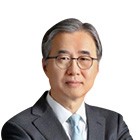
Choi Kang
President
Dr. CHOI Kang is the President at the Asan Institute for Policy Studies. Previously, he was the dean of Planning and Assessment at the Korean National Diplomatic Academy. In 2012, Dr. Choi served as the president at the Institute of Foreign Affairs and National Security (IFANS). He was also a professor and director general for American Studies at IFANS, a research fellow at the Korea Institute for Defense Analyses, and senior director for Policy Planning and Coordination on the National Security Council Secretariat. He holds several advisory board memberships including: the Committee on Foreign Affairs, Trade, and Unification of the National Assembly; Ministry of National Defense; Ministry of Unification; Air Force Development Committee; and the National Unification Advisory Council. Dr. Choi was also a South Korean delegate to the Four-Party Talks. He writes extensively on the ROK-US alliance, North Korean military affairs, inter-Korean relations, crisis management, and multilateral security cooperation. Dr. Choi received his B.A. from Kyunghee University, M.A. from the University of Wisconsin-Madison, and his Ph.D. in political science from Ohio State University.
view more