
Video

Publications
Issue Briefs
Publications | Issue Briefs
Analysis of the Results of North Korea’s 9th Workers’ Party Congress:
A Sweeping yet Hollow Display of Achievements
and an Emphasis on Hostility Toward South Korea
Cha Du Hyeogn, Han Ki-bum, Su Bo Bae
3,4152026.03.11


The key characteristics and policy implications that emerged from the 9th Party Congress can be summarized as follows: (1) the highlighting of Kim Jong Un’s personal achievements and his completeness as the supreme leader; (2) the continued vulnerability of the economic sector, still implied despite the regime’s sweeping propaganda about its accomplishments; (3) the determination to pursue a dual-byungjin (Parallel Development) in the military sphere, combining “nuclear weapons and the economy” as well as “nuclear forces and conventional forces”; (4) a power structure that continued to avoid risk despite a political generational shift, and a succession scenario involving Kim Ju Ae that remains only a possibility; and (5) the clear expression of hostility toward South Korea.
In particular, in the military domain, North Korea made clear its determination to continue military buildup despite economic hardship, and above all demonstrated its intention to steadily secure the capabilities necessary to sustain its theory of “Relationship between two belligerent States” by incrementally strengthening weapons systems aimed at South Korea. North Korea also reaffirmed its long-standing position that expecting or pursuing its denuclearization and reform or opening is itself a hostile policy, while emphasizing that it likewise has no desire to resume inter-Korean dialogue or exchanges and cooperation.
In light of this, South Korea must take a principled approach grounded in patience rather than driven by short-term results. Also, South Korea should avoid letting wishful thinking about an early U.S.-DPRK dialogue weaken or sideline the goal of denuclearization. If the United States shows little sign of renewed engagement with North Korea even after President Trump’s visit to China in April, or if North Korea proceeds with heightened demonstrations of its nuclear and missile capabilities, Seoul and Washington will need to begin prior consultations on how they should respond.
This article is an English Summary of Asan Issue Brief (2026-11)
(‘북한 9차 노동당대회 결과 분석: 대대적이지만 공허한 치적 과시와 대남 적대의식의 강조’)

Cha Du Hyeogn
Vice President, Principal Fellow, Director
Dr. Cha Du Hyeogn is a North Korea Study expert who has shown various research performances on North Korean Politics and Military, U.S.-ROK Alliance, and National Crisis Management, etc. He is the Principal Fellow of Asan Institute for Policy Studies, holding an additional post as Visiting Professor of Graduate Institute of Peace Studies in Kyung Hee University. He also has served as Adjunct Professor of University of North Korean Studies (2017~2019), Senior Foreign Affairs Advisor to the Governor of GyeongGi Provincial Government (2015~2018), Visiting Scholar of Korea Institute for National Unification (2015-2017), the Executive Vice President of the Korea Foundation (2011~2014). Before these careers, he was also a Research Fellow at the Korea Institute for Defense Analyses (KIDA, 1989~2012) and the Acting Secretary for Crisis Information to the ROK President Lee Myung Bak (2008). He has worked more than 20 years in KIDA as various positions including Director of Defense Issues Task force (2005~2006), Director of Arms Control Researches (2007), Director of North Korea Studies (2009). Dr. Cha received his M.A. and Ph.D. degree of Political Science from Yonsei University. He has written more than 100 research papers and co-authored books on diverse fields of security and International relations. He has advised for various governmental organizations.
view more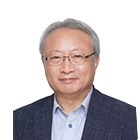
Han Ki-bum
Adjunct Senior Fellow
Dr. Han Ki-bum worked as a North Korea analyst at the National Intelligence Service over 20 years before retiring in February 2009 as the third deputy director (in charge of North Korea affairs). After retiring from the service, he worked as a visiting professor at Korea University and a visiting researcher at the Korea Institute for National Unification, And then served as the first deputy director of the NIS (in charge of North Korea and overseas affairs) again from April 2013 ~ February 2016. Since then, he has been working as a endowed Research Fellow at the Institute for National Unification, then as a endowed Research Fellow at the Institute for North Korean Studies, and as a Visiting Research Fellow at the Asan Institute for Policy Studies from January 2024.
view more
Su Bo Bae
Research Associate
Su Bo Bae is a research associate at the Asan Institute for Policy Studies. She received her B.A. in German Language and Literature from Seoul National University and earned her M.A. in North Korean Studies from Korea University. Before joining the Asan Institute, she worked as a researcher at the Database Center for North Korean Human Rights (NKDB). Her research interests include North Korean human rights, the North Korean political system, and inter-Korean relations.